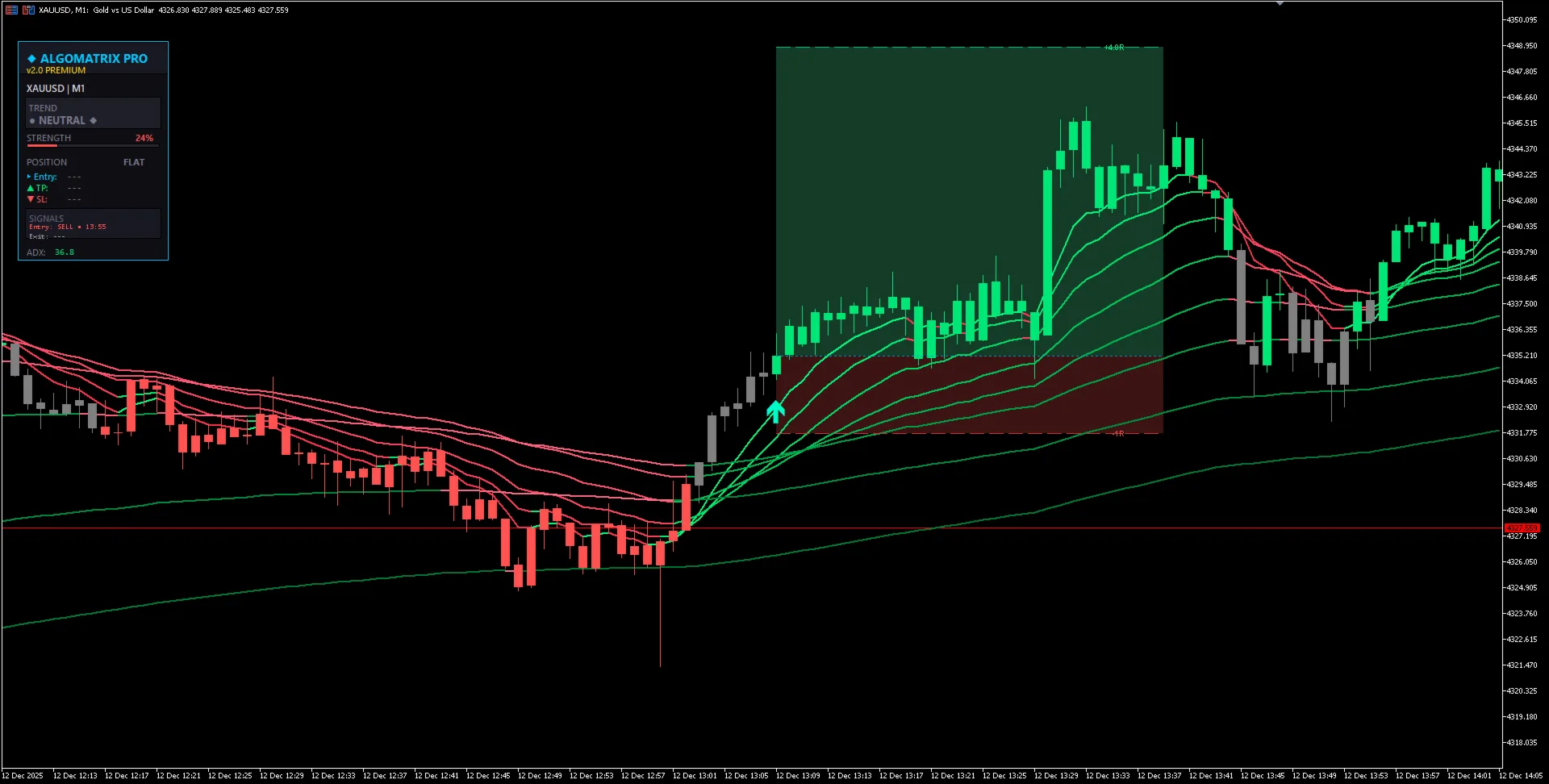
I used to sit down at my desk, open MetaTrader, and start trading immediately. Whatever was happening on the chart - I'd jump in. Trending? I'm buying the pullback. Ranging? I'm fading the extremes. Choppy? I'm trying to scalp the noise. Before I knew it, I had taken 12 trades by lunch, most of them impulsive, and I'd be emotionally wrecked regardless of whether I was up or down.
Overtrading nearly ended my trading career. Not because any single trade was catastrophic - but because the cumulative damage of taking random, low-quality setups day after day was slowly bleeding my account. Death by a thousand cuts.
What fixed this wasn't willpower or discipline "motivation." It was a boring, systematic 20-minute process I now do before every single trading session. It's not exciting. It won't make for a viral YouTube video. But it completely transformed my results.
Why Routines Work When Discipline Doesn't
"Just be more disciplined" is the most useless trading advice in existence. It's like telling someone with a broken leg to "just walk better." Discipline isn't a character trait you either have or don't - it's a byproduct of systems and habits.
When I relied on discipline alone, I'd have good days and bad days depending on my mood, sleep, stress, and whatever else was happening in my life. My trading was a reflection of my emotional state, which meant inconsistency was guaranteed.
A routine removes mood from the equation. Good mood? Follow the routine. Bad mood? Follow the routine. The routine decides whether I trade and what I look for - not my feelings about the market.
The 20-Minute Pre-Market Process
Here's exactly what I do before every London session. I start this 30 minutes before London open (07:30 London time) and I do not place a single trade until I've completed every step.
Step 1: Check the Calendar (2 minutes)
First thing. No chart analysis, no looking at what happened overnight - calendar first.
I check ForexFactory or MQL5 economic calendar for today's high-impact events. If there's FOMC, NFP, CPI, or any red-flag event for USD, I note the exact time and decide whether I'm trading before, after, or not at all.
For gold specifically, USD events are critical because XAUUSD is inversely correlated with dollar strength. I also check for any geopolitical news that could cause abnormal volatility.
This two-minute check has saved me from countless bad trades. Loading a scalping strategy into an FOMC day without preparation is one of the fastest ways to lose money.
Step 2: H4 Chart - Where Are We? (3 minutes)
I open the H4 chart with nothing on it except my EMA Ribbon Trend Pro overlay. Three questions:
- Is the ribbon bullish, bearish, or flat/transitioning?
- Where is price relative to the ribbon? (Above = bullish bias, below = bearish bias, inside = no clear bias)
- Are we near a significant swing high or swing low from the past week?
This gives me my directional bias for the day. If the H4 ribbon is clearly bullish and price is above it, I'm only looking for buy setups. Period. No matter what the lower timeframes show, I don't short against a clean H4 trend.
If the H4 is messy - ribbon flat, price chopping through it - I mark it as "ranging day" and either reduce my position size or skip the session entirely. Ranging days on gold are account killers for scalpers.
Step 3: H1 Chart - Where Are the Key Levels? (4 minutes)
Now I switch to H1 and mark:
- Previous day's high and low
- Any untested supply and demand zones from the last 3-5 days
- The Asian session range (the high and low from midnight to 07:00 London time)
- Any obvious order blocks that formed during the US session yesterday
I draw horizontal lines at these levels. These are my "areas of interest" - the only price levels where I'll consider taking trades today. If price is between these levels with no clear reason to enter, I wait.
This step is crucial because it defines my playing field. Without it, every tiny pullback on M5 looks like an opportunity. With it, I know exactly where I'm looking to trade and where I'm waiting.
Step 4: M15/M5 - What's the Immediate Context? (3 minutes)
Now I go to M15 and M5 to see what's happening right now:
- Is price approaching any of my H1 key levels?
- What's the EMA ribbon doing on M15? (Trending, compressing, or transitioning)
- Is there any range forming that could be set up for a breakout at London open?
I'm not looking for entries here - I'm building context. I want to walk into the session knowing the story: "H4 is bullish, H1 has a demand zone at 2670 that hasn't been tested, Asian session ranged between 2678-2685, and M5 ribbon is starting to turn up." That story tells me exactly what to watch for.
Step 5: Write the Session Plan (3 minutes)
This is the most important step, and it's the one I used to skip. Before any trading, I write - physically write or type - my plan for the session. It looks something like this:
"January 16 - London Session
H4: Bullish, ribbon clean
Bias: Buy only
Key levels: Demand at 2670, Supply at 2698
Plan A: If price pulls back to 2670 zone during first hour, look for M5 wick rejection + ribbon curl for buy entry. SL below 2667, TP1 at 2685, TP2 at 2695.
Plan B: If price holds above 2685 and breaks Asian high at 2688, look for retest entry on break. SL below 2682, TP at 2698.
No trade if: Price chops between 2675-2685 without clean rejection at either level.
Max trades today: 3
Max loss today: 2% of account"
Writing the plan does something powerful - it turns trading from reactive to proactive. I'm not waiting to see what happens and then deciding. I've already decided. Now I'm just waiting for conditions to match one of my scenarios, or not.
Step 6: Mental Check (2 minutes)
Final step: I honestly assess my state. Am I tired? Stressed? Angry about yesterday's loss? Excited because I'm on a winning streak?
Any of these emotional states increase the chance of breaking the plan. I don't pretend emotions don't exist - I acknowledge them and adjust:
- Tired: Reduce max trades from 3 to 1.
- Stressed: Either skip the session or reduce position size to half.
- Coming off a loss: The plan stands, but I set a hard rule - if the first trade is a stop, I'm done for the day.
- On a winning streak: Most dangerous state. Overconfidence leads to oversizing. I force myself to stick to normal position size no matter how well things went yesterday.
Step 7: Wait for the Open (3 minutes)
With everything done, I wait for London open. I don't trade during the first 5-10 minutes. These opening minutes are volatile, spreads are wide, and moves are deceptive. I let the dust settle, see which direction the open favors, and then look for my planned setups.
What Changed After Adopting This Routine
The results were not magic. They were gradual but undeniable:
Trade frequency dropped 60%. I went from 8-12 trades per session to 2-4. At first this felt boring. Then I noticed that my win rate jumped from around 45% to above 58% - simply because I was only taking planned setups instead of impulse trades.
Average risk-reward improved. When every trade is planned with predefined entry, stop, and target, I stopped taking trades with 1:1 or worse risk-reward just because "it looked like it was going up." My average winner grew by about 40% compared to the average loser.
Emotional swings decreased massively. I used to feel euphoric after three winners and devastated after two losers. With the routine, wins and losses felt similar - both were plan executions. A stop loss wasn't a failure; it was a planned outcome.
The revenge trading stopped. This was the biggest change. Before the routine, a losing trade would trigger a cascade of revenge trades trying to "make it back." With the written plan, it was simple: hit max daily loss? Session over. Walk away. Review tomorrow. No negotiation with myself.
Rules I Added After Six Months
Over time, I added a few more rules based on patterns I noticed in my trading journal:
The First-Hour Rule
If I haven't taken a trade in the first hour of London (08:00-09:00), I don't lower my standards to find one. Some days, the market just doesn't present a good setup. Those aren't wasted sessions - they're profitable sessions because I didn't lose money forcing a trade.
The Friday Rule
I reduce position size by 50% on Fridays. Gold tends to be erratic on Fridays due to weekly position squaring, and the risk of gap risk over the weekend isn't worth full exposure. This single rule saved me from three account-damaging Friday sessions in the first year.
The News Buffer
No new trades within 30 minutes before or after high-impact news. I'll manage existing positions, but no new entries. The spread alone on gold during news can be 50-100 pips, which destroys any scalp thesis.
The Weekly Review
Every Sunday, I review the week's trades. Not just the numbers - the process. Did I follow the routine? Did I trade outside my plan? Were my losses from plan trades or impulse trades? This review takes 30-45 minutes and is worth more than any indicator I've ever bought.
The Tools That Support the Routine
The routine itself is tool-agnostic - you can do it with a blank chart and a notepad. But certain tools make the process faster and more consistent.
For the H4/H1 bias assessment, I use EMA Ribbon Trend Pro - it gives me an instant visual read on trend direction and strength that would take longer to assess from raw candles.
For session-level analysis, Gold Session Sniper Pro automatically marks session boundaries and ranges, saving me the manual step of marking Asian session highs and lows.
For multi-pair scanning (I occasionally trade EURUSD and GBPUSD alongside gold), Multi Scanner Pro shows me ribbon alignment across pairs without switching charts, so I can quickly assess if the dollar theme is consistent.
And for trade management after entry, Smart Trade Manager Pro handles my multi-level take profits and trailing stops automatically - which matters because the routine's discipline needs to continue through trade management, not just entry.
The Hardest Part
I'll be honest about what nobody tells you: the hardest part of a trading routine isn't building it. It's following it on days when the market is moving and you feel like you're missing out.
The market is screaming upward. Your routine says "wait for pullback to 2670." Price is at 2690 and climbing. Everything in your brain is saying "just buy, you're missing the move." The routine says wait.
Sometimes you miss the move. And that's fine. Because the alternative - chasing, buying at 2690 with no plan, no structural level, no defined risk - is how accounts die. The move you miss today will come again tomorrow. The money you lose chasing doesn't come back.
It took me about three months before the routine became genuinely automatic. Before that, it required conscious effort every single day. There were days I broke the routine - and without exception, those were my worst days. Not because the market punished me, but because I was trading without a framework, making decisions on emotion instead of analysis.
Building Your Own Routine
My routine works for my style, my timezone, and my instruments. Yours will be different. But the principles transfer:
- Calendar first - always know what's coming before you trade.
- Top-down analysis - start from the highest timeframe you care about and work down.
- Define your levels before the session - not during.
- Write your plan - pen and paper, text file, whatever. But write it. Unwritten plans get revised in real-time, which means they're not plans at all.
- Honest emotional check - your mental state is a trading variable. Treat it as one.
- Wait for your setup - if it doesn't come, you don't trade. That's the routine working, not failing.
The market will always be there tomorrow. Your capital won't be if you trade without a plan.
Disclaimer: This article shares my personal trading routine and is for educational purposes only. It is not financial advice. Trading gold involves significant risk. Your results will depend on your own strategy, risk management, and market conditions. Always practice on a demo account first.